PEAK FALL COLORS IN KC
Kansas City is entering PEAK fall color season, when bright reds, golden yellows, and burnt oranges dot the landscape. Take a hike through Maplewoods Natural Area, one of our Kansas City WildLands, to experience the best fall has to offer!

Post Oak (Q. stellata) leaf displaying vibrant red fall color
Why do leaves change color?
Tree leaves are green throughout most of the year because they contain chlorophyll, a green pigment that helps trees produce energy through photosynthesis. Tree leaves also contain other pigments called carotenoids, which aid in photosynthesis. As days shorten, chlorophyll begins to break down. Leaves lose their verdant green coloration, allowing the yellow and orange hues of the carotenoids to shine through, especially in our native hickories, cottonwoods, and sycamores.
Unlike the golden yellows and burnt oranges, those bright reds and deep purples aren’t always present in the leaf. They’re created each fall when sugars become trapped in the leaves. These trapped sugars undergo a chemical reaction that produces pigments called anthocyanins. Warm, sunny days and cool nights help drive this process, giving us the bigger, brighter, and bolder colors we see in trees such as sweetgum, ash, maple, and dogwood.

Shagbark Hickory (Carya ovata) with golden yellow fall color. Photo by flamingoturkey, via iNaturalist. CC BY-NC 4.0

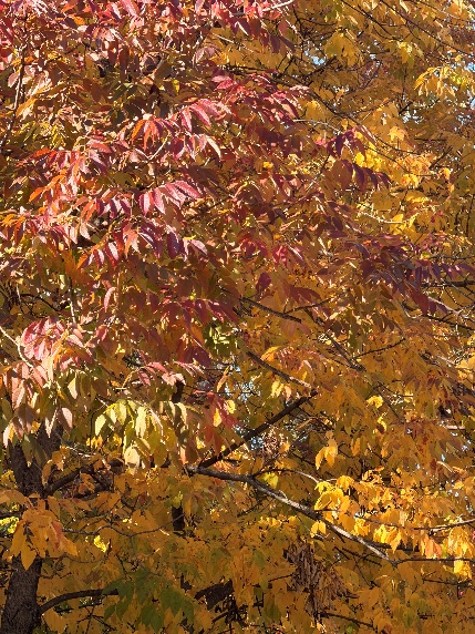
Ash (Fraxinus spp) Tree in Fall

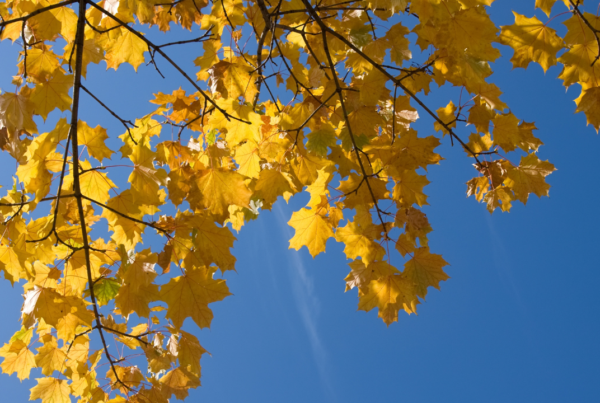
Sugar Maple(Acer saccharum) showing off why they’re king of fall color.
Kansas City loves red. Whether it’s them CHIEFS, a Taylor Swift song, or a maple tree, fall in KC is synonymous with red.
When we’re consulting with homeowners about planting trees in their yards or along the street, people often ask for trees with the best fall color. For better or worse, maples have become synonymous with fall color, leading to them being overrepresented in our urban forest.
Species diversity is one of the best ways we can protect our city’s trees from a changing climate, new invasive pests, and diseases. When we overplant one type of tree, we increase the risk of widespread tree loss, like we experienced with Dutch elm disease and, more recently, the emerald ash borer. Some cities in our region have gone as far as removing maples, at least temporarily, from their approved tree planting lists to help bring more diversity to our region.
So what can you plant if you want fall color that’s NOT a maple?
Large Shade Trees
Black Tupleo or Black Gum. No this tree doesn’t drop any of those pesky spikey balls, but it does have some of the most brilliant reds we see in the fall. In particular we like the wildfire or james forest fire varieties.