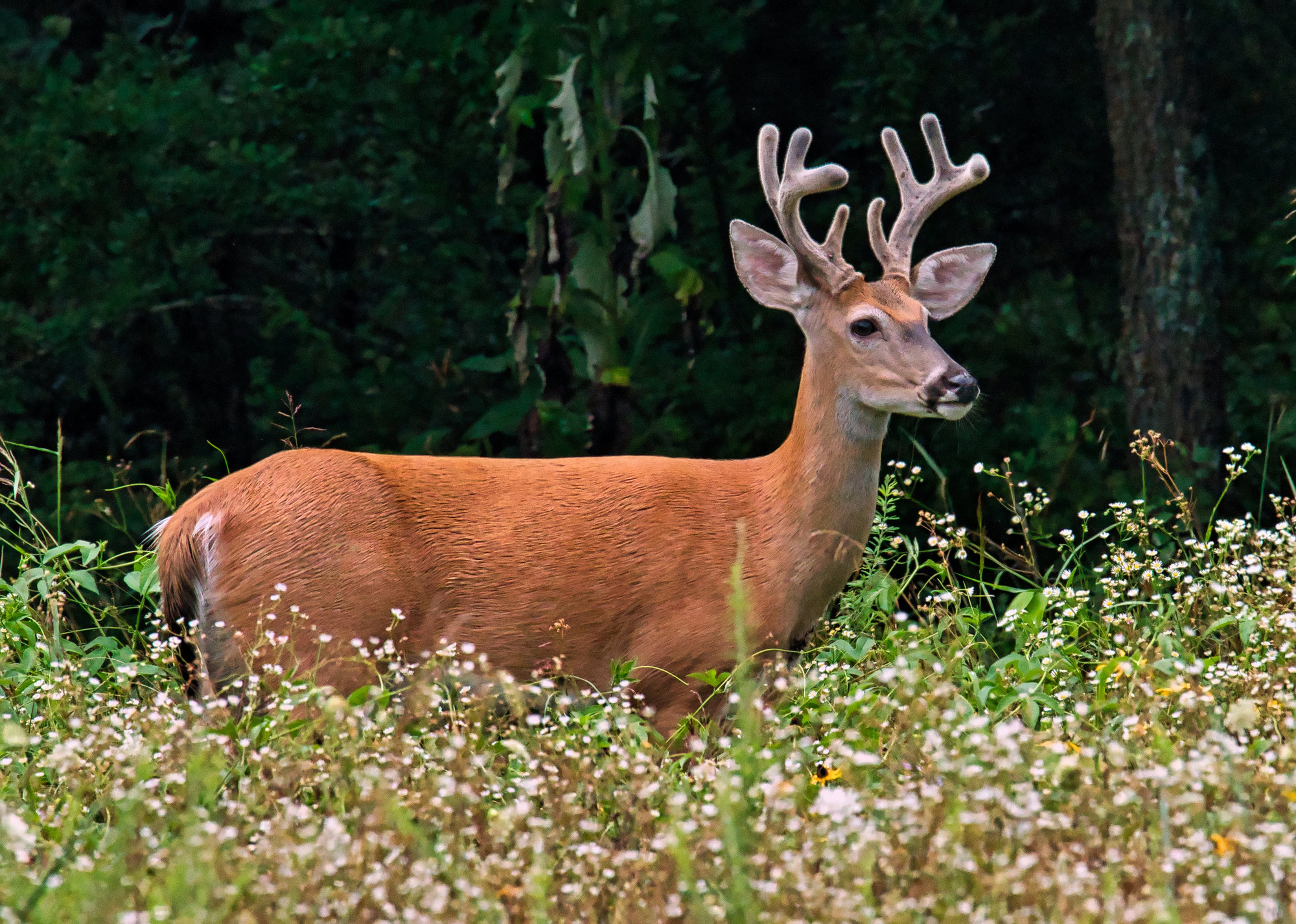
A white-tailed buck with velvet on its antlers at Wilson’s Creek National Battlefield in Missouri, Michael Woods. nps.gov
FALL TREE PROTECTION
One of the benefits of trees is providing resources for our local wildlife. Unfortunately, sometimes our furry neighborhood friends can harm our trees, especially when the trees are young and recently planted.
Some of the most significant wildlife damage that we see in young trees come from deer. Deer cause damage to our trees both from munching on the leaves and rubbing on the trunks. While both male and female deer eat leaves, only males rub tree trunks.
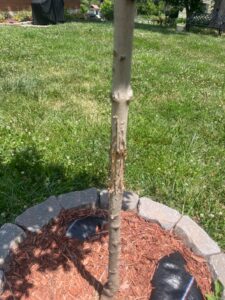
Deer damage on young tree
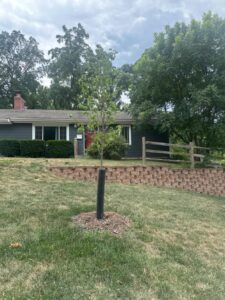
Corrugated style tree protection
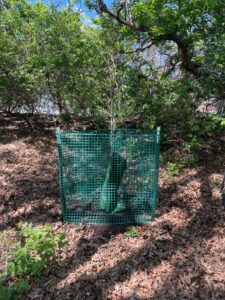
While adding a sleeve to the trunk will protect the tree from rubbing, it won’t protect the leaves from browsing. For protection against browsing and rubbing, you can add three to four posts outside the drip line of the tree, wrap wire or plastic fencing around the posts, and secure the fencing. Make sure you are still able to water the tree once the fencing is installed. You can do this by leaving a section of the fencing that is easy to open or that you are still able to access the watering bag or other watering device.