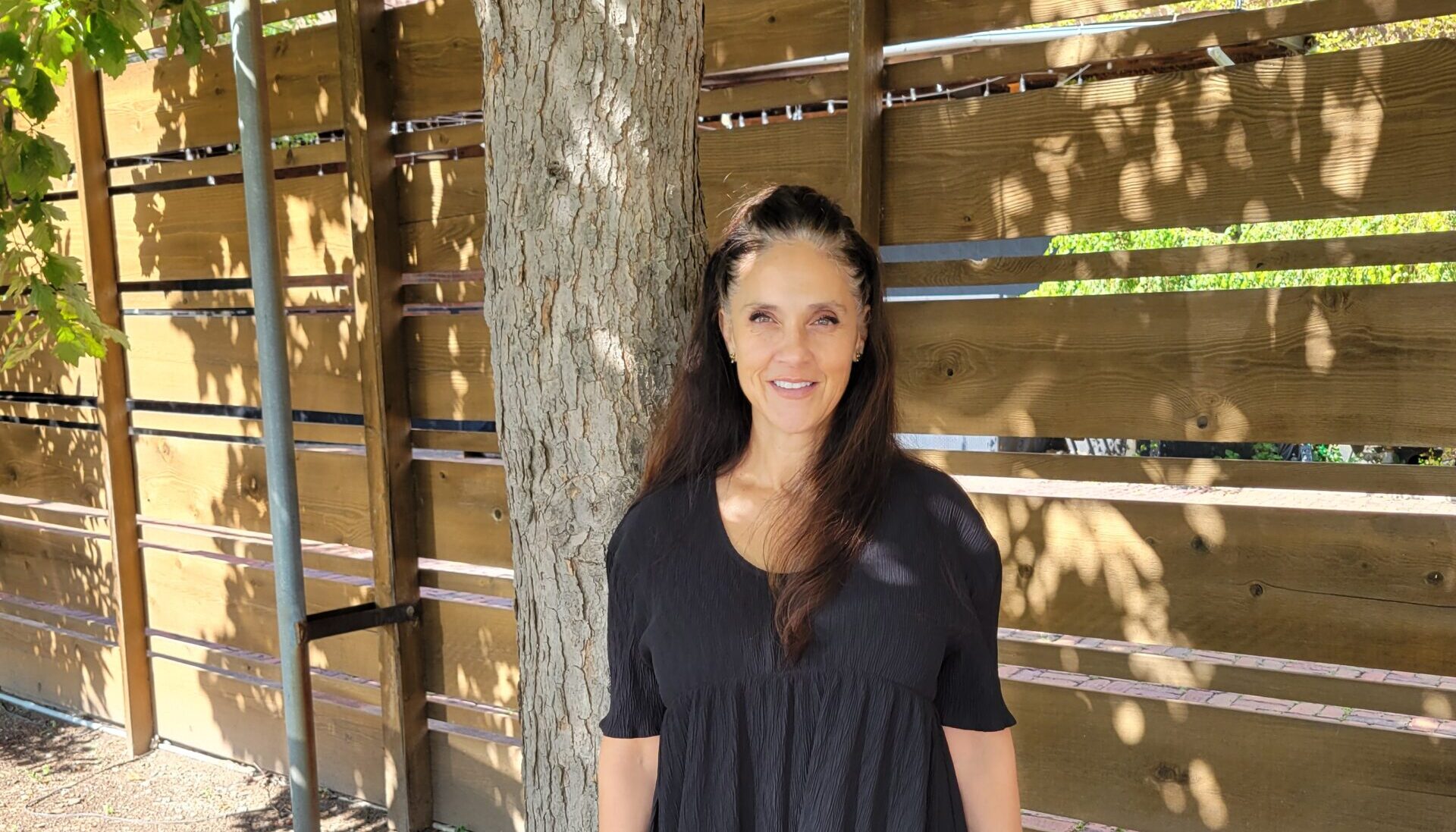
From a 31-year career in civil service to her most recent collaboration as a neighborhood leader on a Rebuild KC grant in the fall of 2024 with our Heartland Tree Alliance program, Tonya Davis has been a longtime supporter of environmental efforts in KC. We recently sat down with Tonya to chat about the project she initiated to have dying ash trees removed and replanted with new trees in her North Kansas City neighborhood of River Forest. Tonya also reflects on her volunteer time with Bridging The Gap and her passion for transforming her yard into a native habitat.
Q: Tell us a little bit about yourself and how your work has intersected with Bridging The Gap over the years.
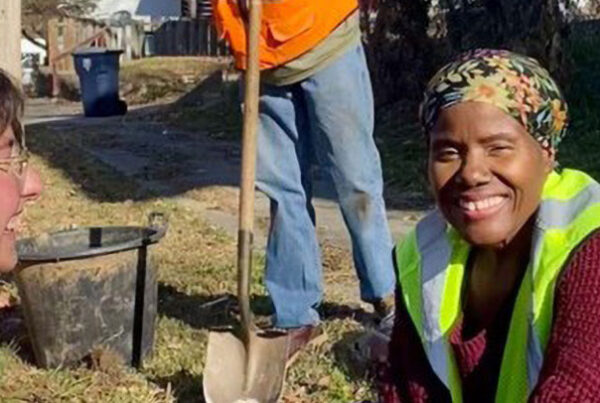
A: I worked in environmental management and public works for the city for 31 years. Early on, my focus was waste minimization, and Bridging The Gap was instrumental in helping [the city] to land a curbside recycling program and track participation rates. When I started to transition out of civil service, I was trying to find a spot where I could land, and that’s how I got my Tree Keepers certification [through Bridging The Gap], and I did a couple of plantings with Heartland Tree Alliance. That led me to write a Rebuild KC grant from the KCMO Neighborhood Services Department funded by the American Rescue Plan Act [for removing ash trees from private property in my neighborhood]. It was just so open, that I said, “Let me try this!” not thinking I would even have a chance to get it!
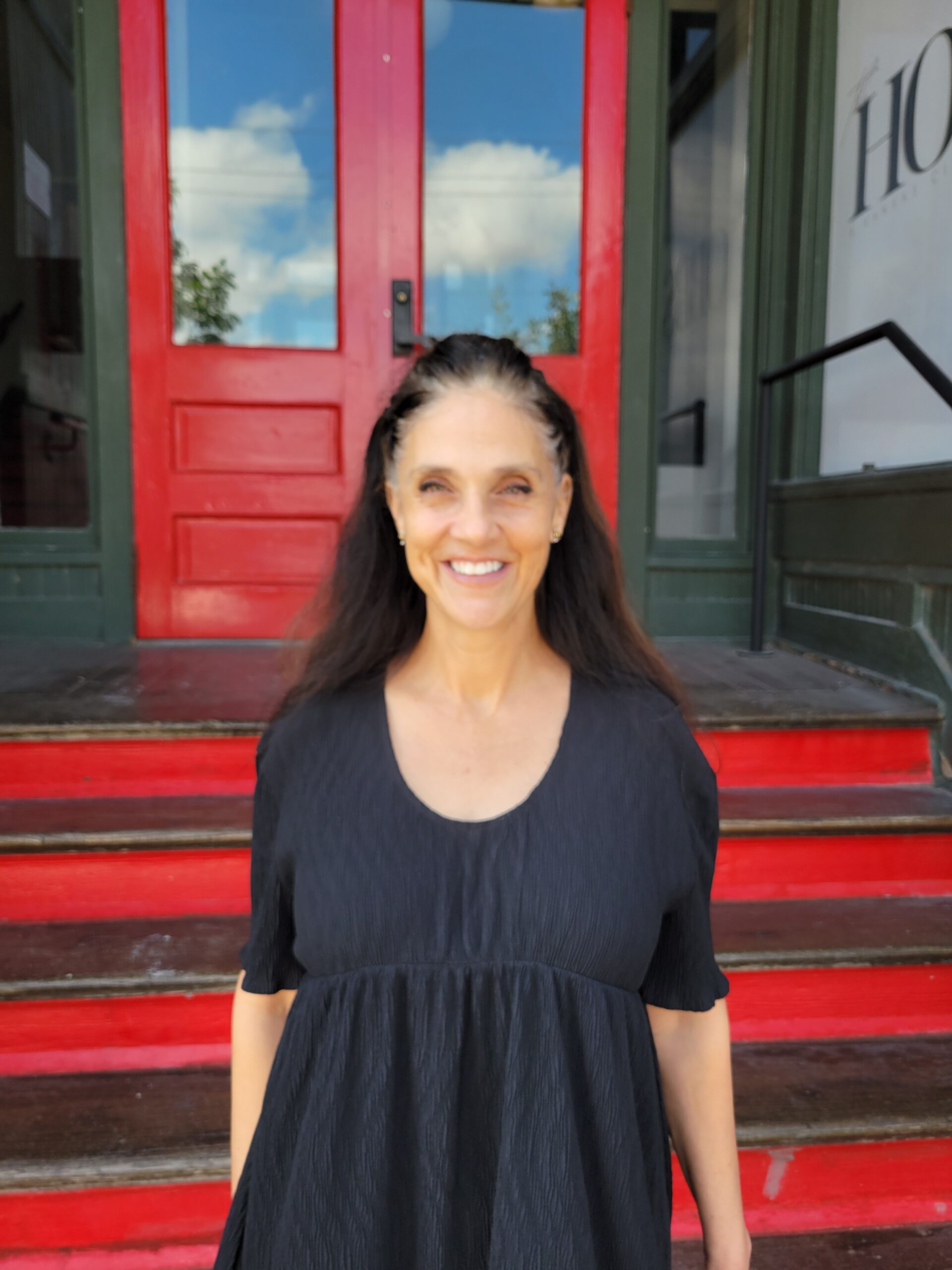
Q: You did get it and worked in partnership with Bridging The Gap’s Heartland Tree Alliance to implement the project, where 23 dead or dying trees were removed and replaced with 18 new ones in your neighborhood. Why was this important to you and what was it like seeing that project become a reality?
A: We were losing our canopy. If we have an opportunity to have these dead trees taken down using grant money and then replanted with new trees, why not take a hold of it?
I think I sat in my car and cried the first time I came down my street and saw all the trees removed. Because even though most of the trees had lost so much of their canopy already, the complete loss and having them at the curb – it felt almost like going through some of the tornado areas and seeing all these uprooted trees, and for me it was the loss of a security blanket. I had no idea that the trees were like that [for me].
Q: And now?
A: I grin from ear to ear when I look down my street and see the little 6-footers [trees] with their green watering bags attached to them. And to see my neighbors out there filling the bags with water and caring for the trees. I’m so thankful that so many people came together to do this for our neighborhood and the next generation.”
Q: You’ve also volunteered several times with us to plant trees. Why do you volunteer and what have you learned?
A: When you have the time and the wherewithal to do it, you should. Because you need it. It’s [environmental programs] what makes me happy, and trying to make a difference has made me happy. If we continue to ignore our ecological world, we’re in a world of hurt.
I definitely learned how to plant trees…you take that experience with you, and you’re able to let other people know this is how you’re supposed to plant [and how to mulch properly] with a donut, not with a volcano. That you do have to water for years after. It’s just all that process when so many people think, “Ok, I just get a bucket with a plant in it and stick in the ground, and we’re good to go.”
Q: Do you have a favorite tree?
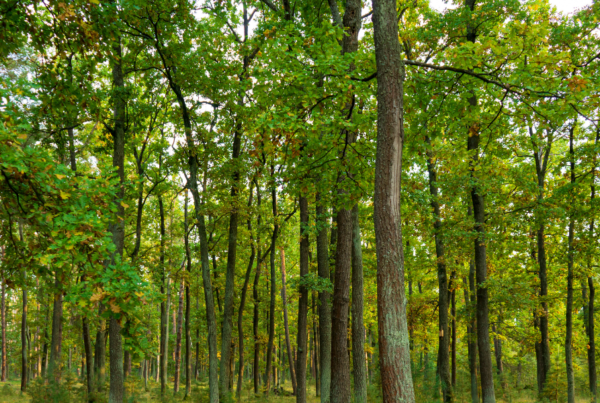
A: The oak! It’s a keystone species. So much life comes out of it. The shade [it provides], the life [it gives], how easily it comes up, especially when the squirrels are doing the job for you [acting as seed dispersers]. I think that’s my favorite tree.
Q: What is your passion today when it comes to the environment?
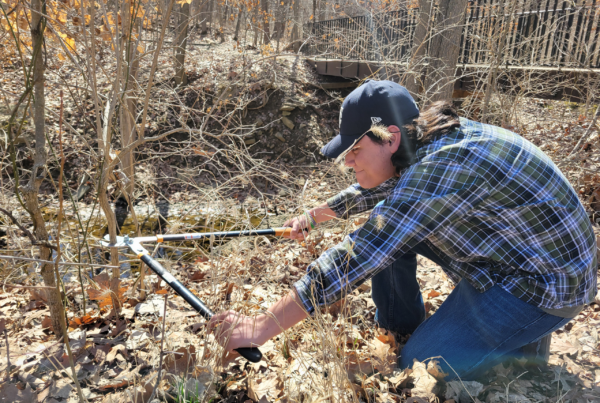
A: I’ve gone from waste minimization to focusing more on how ecosystems work and what I can do in my own yard. I had a yard that I never even saw a blue jay in. And I’m sitting here thinking this is just so wrong in so many ways. So, I did a complete rewild of my backyard. My neighbors were absolutely wonderful about it. [Now] I see finches, and orioles, and juncos beside the house wrens, and the sparrows, and the chickadees.
Q: Why do you think it’s important to model sustainability in your own yard?
A: We have a world of green carpeted lawns showing us that’s the way we’re supposed to be. So, if you show your neighbors that hey, I’m just going to take 10 percent of my yard, do nothing but native plantings, it shows them that you can have this whole different world of giveback, and you can still have a beautiful lawn.
It’s changing how we look at things and what is considered beautiful. I love the book Nature’s Best Hope. That was an inspiring book, because the author basically said if everyone just did 10 percent of our lawns and didn’t have a green carpet, it would be equal to another Yosemite National Park.
Even if it’s just trying to do a monarch garden or planting one native plant and sit back and look at all the insects and birds and how your yard does and how it adjusts and what it brings back to you. Oh my gosh, it is just so exciting.