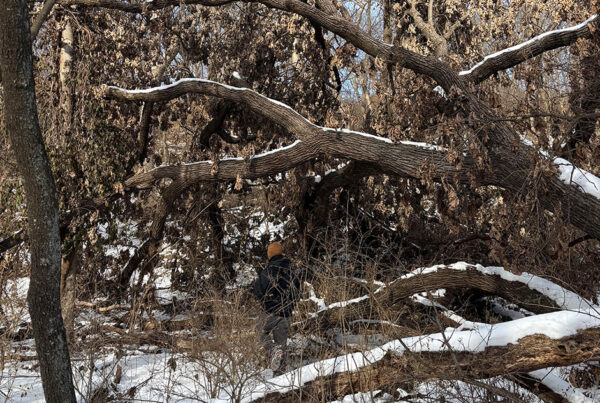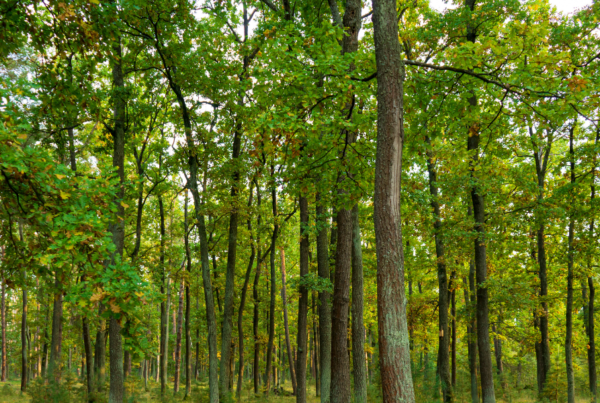

Fall brings cooler temperatures and brilliant autumn color. And for many, the arrival of autumn also means yard work…time to rake the leaves, dead head the flowers, prune back our bushes, and tidy up our gardens going into winter. But, do we really need to spend days trimming, raking, blowing, and bagging?
The answer is no.
Sure, there are a few upsides. Leaf piles are fun to jump in, raking is good exercise, and all those colorful leaves can be beautiful in one place. But it gets old fast. The good news? You don’t have to. In fact, opting for a more natural look by leaving stems and seedheads of your flowering plants standing and letting leaves stay where they fall not only saves your back, but it also helps native insects and pollinators survive the winter.
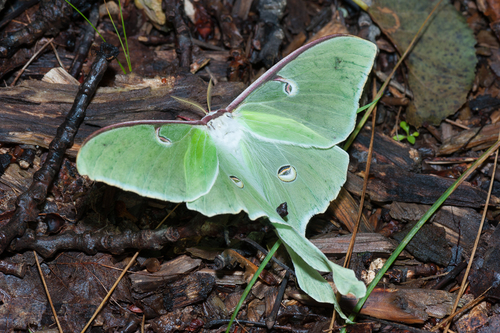
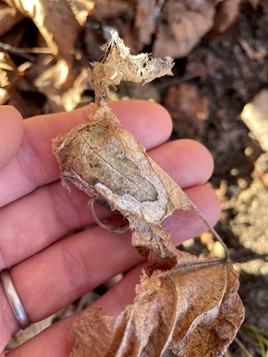
Many insects rely on leaf cover and hollow stems for shelter: Luna moths (Actias luna) and giant swallowtail butterflies (Papilio cresphontes) disguise their cocoons and chrysalises as dead leaves. Hackberry emperor (Asterocampa celtis) and tawny emperor moth (Asterocampa clyton) caterpillars turn brown in fall and tuck themselves into rolled hackberry leaves, which protect them through winter. Red-banded hairstreak butterflies (Calycopis cecrops) lay their eggs on the underside of fallen oak leaves, which provide the first meal for the caterpillars in spring.
Bumblebees (Bombus spp.) also depend on leaf litter. Unlike honeybees, bumblebees form annual colonies. Each fall, a queen burrows a couple of inches into the soil to overwinter. She enters a state of diapause, like hibernation, during which her body produces a natural antifreeze to survive the cold. A blanket of one to two inches of leaf litter insulates the soil and protects her from temperature swings, greatly increasing her chances of survival.
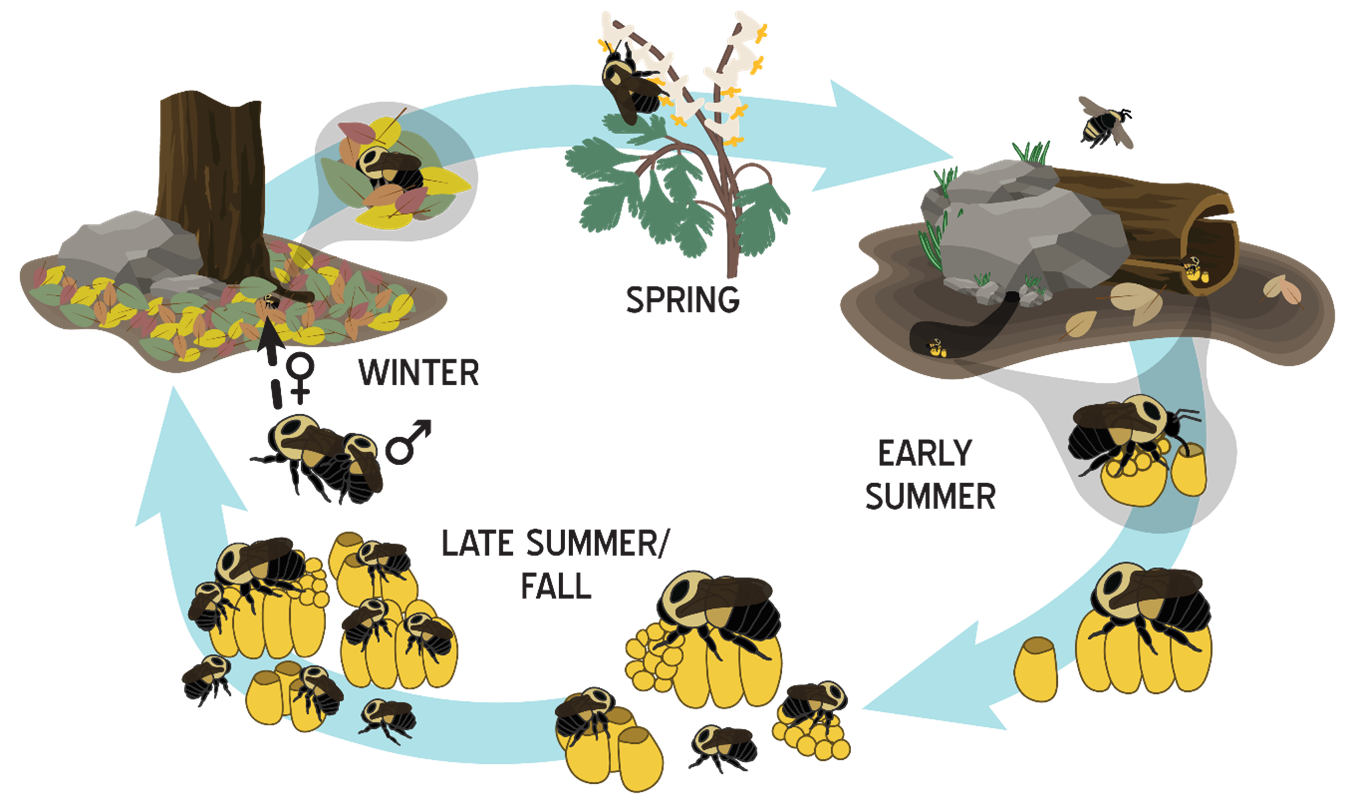
Bumblebee life cycle diagram – UW Madison Extension
Like the bumblebee, predatory insects such as the six-spotted tiger beetle benefit from the insulation a layer of leaves provide. These insects live completely underground as larvae and overwinter as adults in burrows. Tiger beetles are voracious predators of pest insects like aphids, scales, and other caterpillars, helping to keep your lawn and gardens pest free. Fun fact: adults can live up to five years!
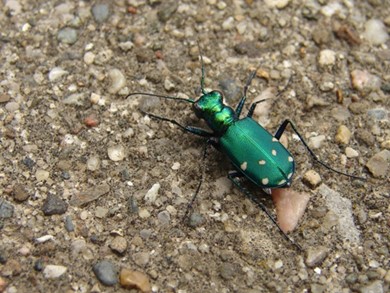
Adult Tiger Beetle Copyright © 2006 Steve Scott
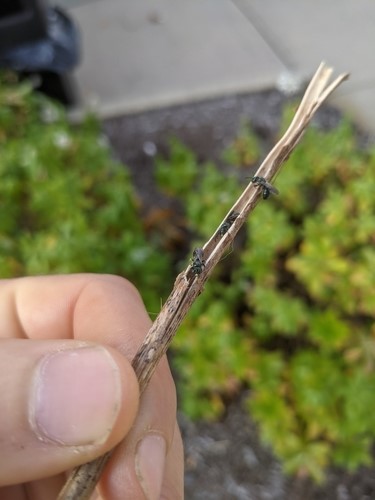
Seventy percent of native bees are solitary and nest in the ground, while the rest use dried flower stems, twigs, and fallen wood. Small carpenter bees, like the spurred carpenter bee (Ceratina calcarata), nest in the broken stems of pithy plants. Adults create chambers, stock them with pollen, and then overwinter in the nest, guarding their young until spring.
The good news is that you can save yourself hours of yard work AND easily provide habitat for these pollinators and other beneficial insects to overwinter. Here are three simple steps:
- Plant a diverse mix of native flowers, trees, and shrubs.
- Leave flower stems and seed heads standing through the winter.
- Let leaves lie where they fall or rake them into garden beds and around trees to act as mulch.
Want to learn more? The Xerces Society has a great guide on creating overwintering habitat: Overwintering Pollinators and their blog post: Leave the Leaves!