
Picture yourself outside on a summer day. Maybe you’re enjoying a nice day with family/friends or exploring a dirt path on a hiking/biking trail, and then your enjoyment and comfort is all ruined by that slight tickle going up some part of your body. I’m not just talking about that wondering ant, or the spider whose web you walked through 5 minutes ago, but the dreaded tick. If you are like me, you are fed up with these parasitic arachnids hitchhiking their way onto your body for a blood meal and potentially leaving you with the gift of a life-threatening disease or worse… an extreme allergy to red meat. What if I told you there was a way to minimize your chances of getting a tick disease by removing invasive bush honeysuckle?

By Jacobo Barriga. Jacobo is a Kansas City WildLands Program Coordinator.
A study done in St. Louis (Allan, et al. 2010) found that areas that had been invaded with bush honeysuckle not only had an increased density of lone star ticks, but an increased density of infectious lone star ticks. This was due to a higher density of deer which carry bacteria that is only harmful when it enters our bloodstream. Since the population of deer preferred the cover of bush honeysuckle, ticks gathered to feed on the deer becoming vectors for a disease known as ehrlichiosis, a potentially deadly bacterial disease that is easily treatable if diagnosed in time. Sadly, this disease has some symptoms that I experience at least once a week. Symptoms of ehrlichiosis begin with muscle aches, confusion, severe headaches, nausea, vomiting, loss of appetite, chills, and a fever. The disease can then develop into some serious long term health issues. However, this doesn’t mean you should be fearful of ever going back into the woods. Between 2019-2022, in the KC Metropolitan area, at least 92 people had been reported to have gotten the disease out of the 1.7 million living in the area. This is coming from CDC’s data on tick infections from Johnson, Wyandotte, Jackson, and Clay counties. Now, you may be asking what is a lone star tick?
Lone star ticks are just one of the common ticks found in Kansas and Missouri. Just like spiders and scorpions, ticks are an arachnid closely related to mites, such as chiggers. They have eight legs when an adult, have only 2 body segments, and have fang-like chelicerae at their mouths. The adult female lone star tick is the easiest to identify, as they have a distinguishable white dot on their back. Common ticks in the KC area include the American dog tick, deer/blacklegged tick, and the brown dog tick. Common tick diseases include anaplasmosis, babesiosis, ehrlichiosis, Lyme disease, tularemia, and spotted fever. These illnesses can have some similar symptoms to begin with but typically develop into distinct, serious long-term health issues; it is always best to let your doctor know if you’ve been feeling under the weather after a tick bite. Recently, the lone star tick has been getting more attention due to the rise in cases of people developing an allergy to red meat after getting bitten. The lone star tick is thought to be the leading cause of this allergy known as alpha-gal syndrome. Alpha-gal happens when the lone star tick digs into your skin for a blood meal and introduces a new carbohydrate, typically found in mammals, into your blood stream called alpha-gal. This molecule triggers your body’s immune system to create antibodies to fight off the new molecule like an allergy. Then, usually 2-6 hours after eating things like beef, pork, marshmallows, or ice cream, you have an allergic reaction that can range from a stomachache to anaphylaxis. After hearing about the dangers of a tick bite, you might be wondering how to limit your chances of getting bitten.
Depending on how much time you have to prepare for your next trip outdoors, there are several ways to protect yourself from these unwanted blood thieves. It is always suggested to have a layer of clothing that covers your skin to make it a litter harder for ticks to immediately go for the bite when they hitch a ride. Once you have some lightweight pants and long sleeves, the next step you can take is treat your clothes with permethrin, a chemical that shouldn’t be put on your skin and allowed to thoroughly dry on your clothes before wearing them. Permethrin is a great deterrent for ticks, and other arachnids like chiggers, and can even kill or stop the ticks dead in their tracks while on your treated clothes. On top of treating your clothes, you can apply bug sprays containing DEET or picaridin as an extra deterrent. For those who are sensitive to these chemical treatments, another option that is always smart to do is to tuck in your clothes. By tucking your pant legs into your socks and your shirt into your pants, you’re creating your own tick armor (bonus points if you duct tape the top of your sucks). This may seem a bit much when you consider how small these critters are, but we think it’s well worth it when considering the health risks of getting bit by ticks.
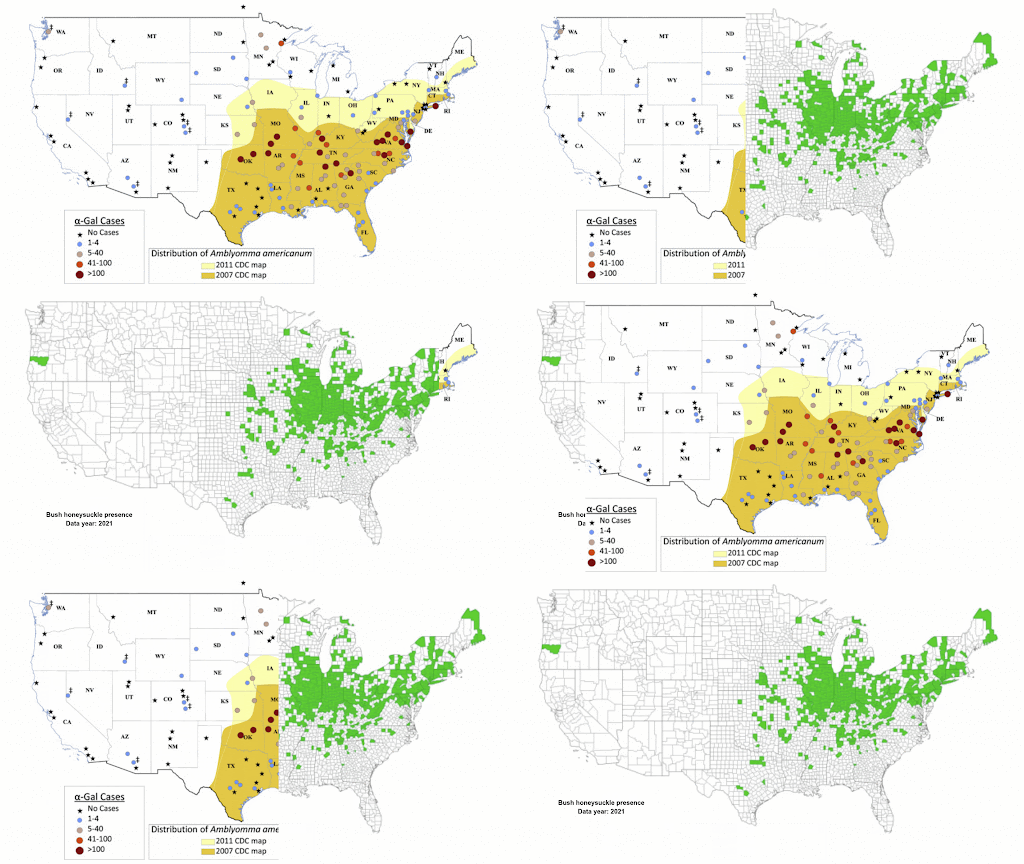
Comparing lone star tick range and invasive bush honeysuckle range
If all this information about infectious ticks and bush honeysuckle is making you mad, there is an answer to the problem that allows you to take out your frustration while reducing the chance of encountering infectious ticks. Attending workdays to remove bush honeysuckle, like the ones led by KC WildLands, is a great way to show those plants how upset you are while restoring balance in the ecosystem. Improving the quality of our ecosystems can lower the density of infectious ticks, and keep the populations of ticks at bay. Looking back at the study (Allan, et al. 2010) done in St. Louis, it was found that in sites where honeysuckle was removed, infected tick populations were less dense. This means that while you’re walking through your favorite trail, if you do encounter a tick, it would be less likely to give you a disease if there was also less invasive bush honeysuckle. The removal of this invasive shrub would also benefit your forested areas, meaning that more forest critters like opossums, coyotes, foxes, and snakes would be able to find habitat to begin snacking on ticks or small mammals carrying ticks.
When a forest is left to fend for itself against bush honeysuckle, it doesn’t stand a chance against its aggressive invasive nature, pushing out native plants that act as a food source and habitat for our native wildlife. The ecosystem bush honeysuckle creates increases deer activity that introduces diseases that ticks can transmit to humans. If we take action and remove bush honeysuckle from our ecosystems, we could help decrease the chances of encountering infected ticks and help bring restore our forests. A healthy forest is a healthy community — keeping the health of our woodlands and forests is just as important as keeping ourselves healthy, so be sure to put on that tick armor, whatever that may look like for you, and help out our natural areas.
Wanting to take action and remove invasive honeysuckle in a natural area in Kansas City? Keep an eye out on our calendar for invasive species workdays coming near you!